
Buying guide
Transport chair or standard wheelchair?
Four small wheels or two big ones. This is the most expensive mistake in the category, and it takes one question to avoid.

These look similar in a photograph and they are two different products. Buying the wrong one is the most common expensive error people make here.
The one question
Will the person move themselves?
If yes, they need large rear wheels with hand rims to push on. That is a standard wheelchair.
If no, and somebody else will always push, small wheels all round are lighter, narrower and cheaper. That is a transport chair.
Why it matters more than it sounds
Self-propulsion is not a feature, it is autonomy. Someone who can move themselves across a room without asking is living differently from someone who has to wait. Buying a transport chair for a person who could self-propel quietly removes that, and it is the kind of decision families make with the best intentions.
The reverse error costs money and back strain: a full self-propel chair for someone who will never use the rims is heavier, wider and harder to store for no benefit.
The middle case
Plenty of people self-propel indoors and get pushed outdoors. Look for a chair with quick-release rear wheels: large wheels on at home, off for the car.
Doorways
Self-propel chairs are wider, because the hand rims add roughly two inches. Measure your narrowest interior doorway before deciding, not after.
General information, not medical advice. If fit, posture, pressure relief or fall risk is part of your decision, speak to an occupational therapist.
What we recommend
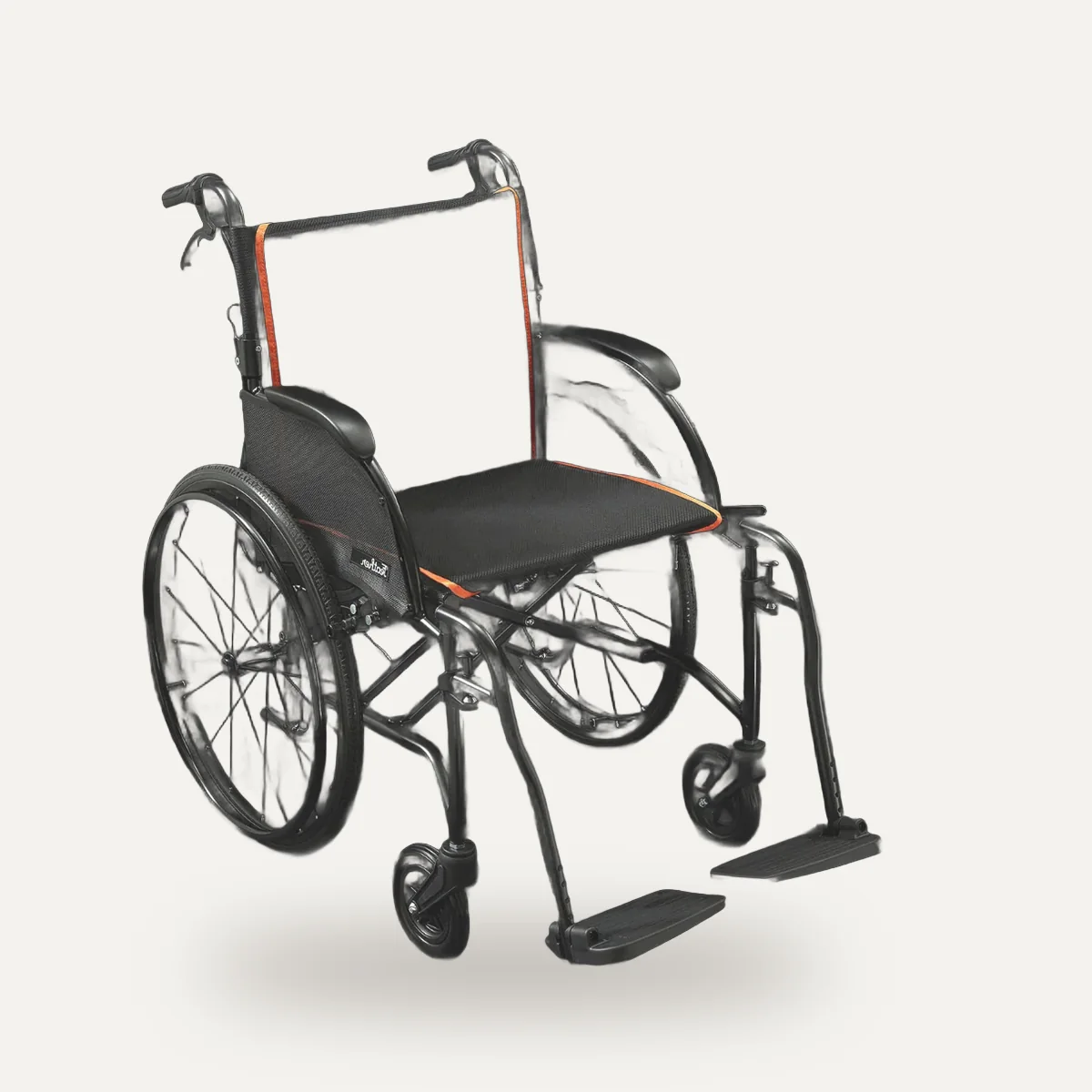 Best for lifting into a car single-handed
Feather Chair
This is the chair to buy when the person doing the lifting is the constraint.
from $1,199
See why →
Reviewing
Lightweight transport chair
If the chair is for appointments and the occasional day out, a transport chair does the job for a fraction of the money.
In review
What we are checking →
Best for lifting into a car single-handed
Feather Chair
This is the chair to buy when the person doing the lifting is the constraint.
from $1,199
See why →
Reviewing
Lightweight transport chair
If the chair is for appointments and the occasional day out, a transport chair does the job for a fraction of the money.
In review
What we are checking →