
Buying guide
When should you switch from a walking stick to a rollator?
The signs a stick has stopped being enough, and the cases where a rollator is the wrong answer rather than the next step.
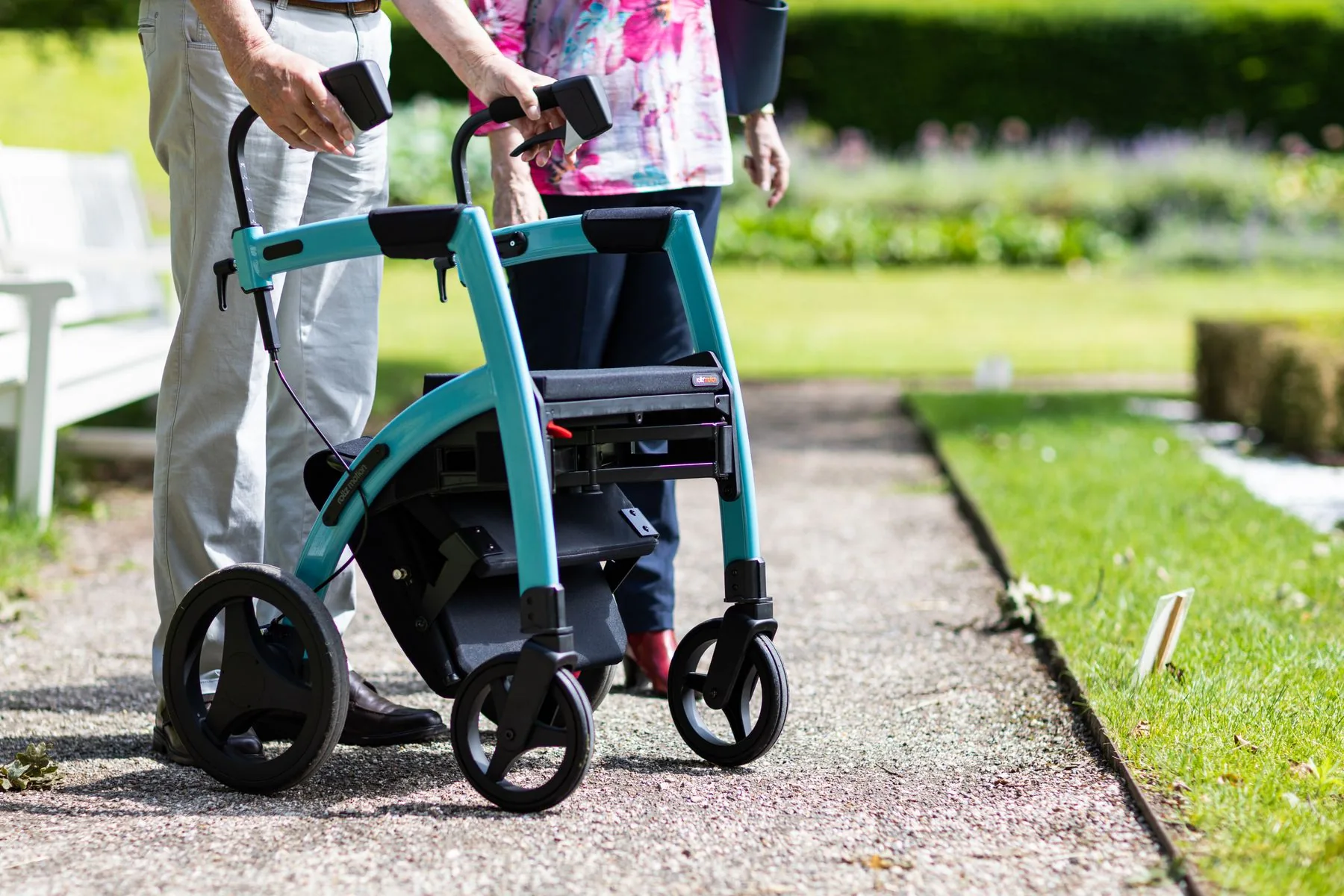
Most people do not wake up one morning knowing the stick is no longer enough. What happens is quieter than that. The walk to the shop gets planned around benches. A hand goes out to a wall or a parked car without anyone deciding to do it. The stick still gets picked up every day, and it still helps, but it is being asked to do a job it was never built for.
Deciding when to move from a walking stick to a rollator is not really a purchase decision. It is one step in mobility adaptation, the ongoing work of changing how you move as your needs change, so that you stay active and involved rather than gradually staying in.
What each one is actually for
A walking stick does two things well. It gives a small amount of weight relief through one arm, and it gives you feedback about the ground: a fourth point of contact that tells you where the kerb is and how the surface behaves. It is light, it stows anywhere, and it asks almost nothing of you.
A rollator does something different. It is a wheeled frame with hand brakes and, on most four wheeled models, a seat. It carries a meaningful share of your weight, it moves with you rather than being lifted and placed, and it lets you sit down at the moment you need to rather than at the next bench. That seat is the part people underestimate. It is often the reason a walk becomes possible again rather than shorter.
Signs the stick has stopped being the right tool
- You are planning routes around places to rest, or turning back before you meant to.
- You lean harder on the stick than it can honestly support, or it slides on wet ground.
- You are reaching for furniture, walls and railings between the points where the stick helps.
- You are carrying nothing, because both the stick and your balance need your hands.
- Standing still is harder than walking: queues, kerbs and waiting are the difficult parts.
- You have had a fall, or a near fall you did not mention to anyone.
- You are going out less often, and the reason is stamina rather than interest.
The last one matters most. Distance shrinking is the signal to act on, well before it shrinks to the front door.
When a rollator will not solve the problem
Sometimes the honest answer is that buying anything is the wrong move.
If the difficulty is dizziness, sudden unsteadiness, weakness on one side, or falls that come without warning, a rollator can make things worse, not better. A frame on wheels can roll away from someone who grabs it for balance. That situation needs a medical opinion first, and a physiotherapist or occupational therapist assessment second. Equipment comes third, if at all.
If the problem is pain that has changed recently, or a foot that catches, or new confusion about where your feet are, the same applies. A rollator does not treat anything. It changes what is possible once you know what you are dealing with.
And if the home is the problem, narrow hallways, a step at the back door, rugs, poor lighting, then the equipment may be the smaller half of the answer. Changing the house is often cheaper and more effective than changing the walker.
It is rarely one or the other
Most people who use a rollator well still own a stick. The stick handles the short indoor trip, the friend's house with the step, the restaurant table where a frame will not fit. The rollator handles the shop, the park, the hospital corridor, the day out. Choosing by situation rather than by identity is what keeps the range wide.
Be honest about the trade offs before you commit. A rollator has to get through your doorways, in and out of your car, and past whatever step is at your entrance. Three wheeled models are narrower and turn more tightly indoors but usually have no seat. Four wheeled models are steadier outdoors and seated rest is the point of them. Neither goes up stairs.
What to measure and what to ask
Before you buy anything, gather these:
- Handle height. Stand upright in your usual shoes, arms hanging loose, and measure from the floor to the crease of your wrist. That is the starting point for handle height. Check the model's adjustable range covers it.
- Your narrowest doorway, measured at the frame, not the gap you think it is. Then the tightest turn indoors.
- Your car boot opening and its lip height, plus who will be lifting the folded frame and what they can comfortably lift.
- Every step and threshold between the front door and the pavement.
- How far you want to go, not how far you currently go.
Then ask the supplier: what is the user weight limit, what does the frame itself weigh, how does it fold and can I do it one handed, are the brakes push down parking brakes, and what are the tyres like on the surfaces I actually use. Ask a health professional whether a rollator suits your balance, and ask to try one loaded and moving, not standing still in a showroom.
General information, not medical advice. If fit, posture, pressure relief or fall risk is part of your decision, speak to an occupational therapist.